For those who decide to buy or order jewellery, whether it's silver, gold or platinum jewellery, they have to face the problem of understanding the complex, very detailed and multi-step jewellery production process, making the cost of ordering much higher than expected. To reduce these problems, this article will help you understand the basics of every new process to make it easier to make it possible to order the order of Tun.
1. Prototyping (Master Piece)
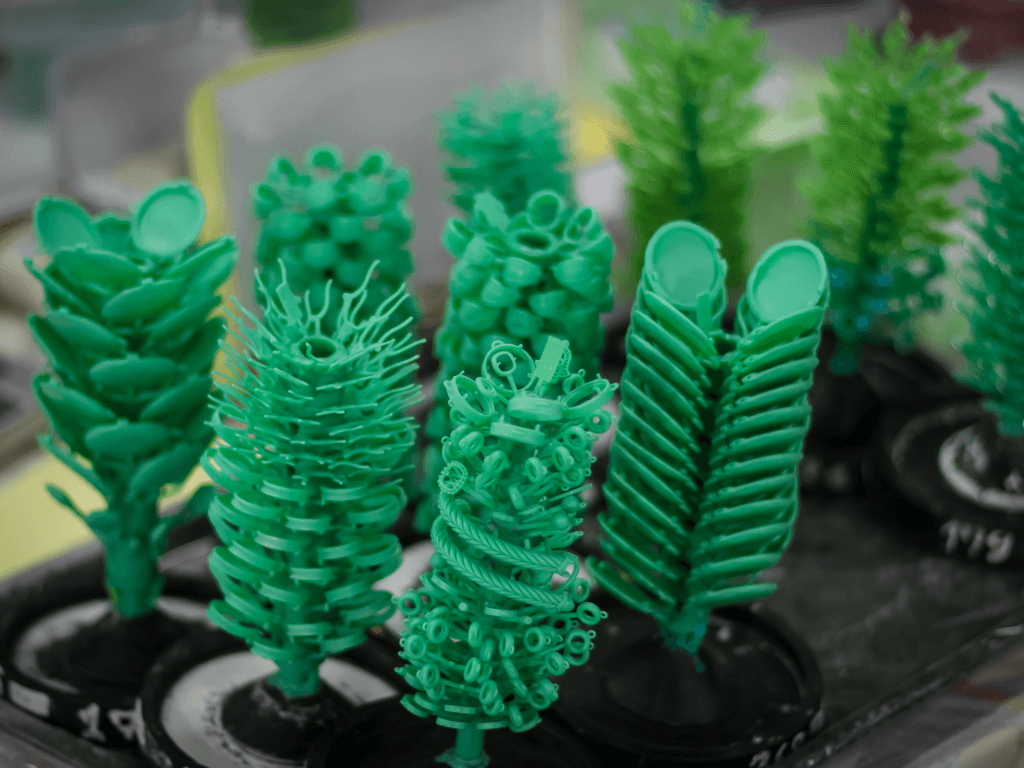
The first process after discussing the details of the product you want to order. The manufacturer will make a prototype into the shape as designed before. Forming according to the draft may use wax or resin in moulding depending on the purpose of the workpiece and the resolution of the workpiece. Nowadays, many manufacturers choose to prototype using a 3D printer to make the work with sharper details. The prototype that is made needs to make a rod to stick to stick the candle.
2. Rubber moulding (Moulding)
When the prototype is completed, it will enter the process of pressing the rubber mould used to make the mould. After getting the prototype, it will be used to make a rubber mould (Mould). When the rubber is already printed, the rubber will be printed to inject the candle to make a candle design and keep the neatness of the workpiece and then stick it to the candle.
3. Mortar casting and metal casting (Casting)
The casting process must be done 2 times. It is a mortar casting in the first step to make a mortar mould. Then bring the mortar mould to make metal casting.
4. Candle burning (BurnOut)
The process is responsible for making the mortar in the dry pot ready for casting. When baking the mortar and chasing candles, when the mortar is dry, the mortar will become a mould for further metal casting. Each mould will use an unequal amount of metal. The weight of the metal used is calculated from the weight of the candle tree that was weighed at the beginning. When getting the mould and calculating the weight of the metal, the metal is melted in a crucible pot made of refractory material. To be put into the mould until it is born into a workpiece
5. Dressing up (Filing)
It is a process of polishing out slightly excess corners to make the work smooth. Including decorating the housing in case there are still not very deep wrinkles or stem cuts.
6. Soldering Assembly (Soldering Assembly)
In the event that the workpiece has a mark that is not connected, causing the workpiece to be uneven together or have gaps. The workpiece must be welded by a laser welding machine to complete the work. Often found in the production of small necklaces or workpiece repair work
7. Embedding gems on the workpiece
Before starting to inlay, you must check the housing of the part to be inlaid first to see if it is complete or not. Is there a hole for inlaying the gemstone completely or not? Then look at whether the gemstone to be inlaid is complete and has cracks or not roughly. In the gemstone inlay, then start inlaying the gemstone according to the customer's desire.
8. Polishing (Polishing) and washing with the system Created at S.M.V. Used as an ultrasonic cleaner (Ultrasonic CleaningMachine)
The process is a process that makes the surface of the workpiece according to the customer's needs. It can be done from polishing to shine, rough polishing, fine polishing by relying on polishing machines and craftsmen in the field of polishing. However, it may reduce the details of the workpiece if polished carelessly. Many manufacturers who order work with very small details or overlapping details therefore leave this process. When polishing is completed, the workpiece will have a little metal debris of the housing left from the polishing, so it must be imported into the process of washing using an ultrasonic machine to remove metal debris.
9. Workpiece plating
There are many types of workpieces, depending on the customer's needs, such as silver plating, gold plating, rhodium plating, and anti-tarnishing plating, etc.
In order for the workpiece to be beautiful and have a long-lasting colour, there must be a process that allows the jewellery to maintain that appearance. That is, the process of plating jewellery or metal with electrolytes (Electroplating). Such a process is a process that uses two substances together to achieve a chemical reaction. By causing one substance to coat the surface of another metal by exchanging electrons back and forth, which relies on a bridge in exchange. The dissolved substance will run to the other side.
Read more articles about the workpiece plating process at
https://siamrington.com/article/what-is-jewellery-plating
10. Workpiece quality inspection (Inspection)
It is a quality check before sending to the customer whether there are any defects or not or check the product details completely again whether they are correct and complete as the customer wants.
If you don't know where to choose, finding a shop or factory that can be discussed. Ask for details at every step, you can be confident that the diamond jewellery you get is worth the money you pay and really understand our needs.

Let Siamrington help to be a contractor and manufacturer for all your work. You can talk, consult, ask for details with peace of mind with complete service, complete every step.
With the reliability of a team of craftsmen for more than ten years, reliable, honest, exquisite.
For more information, please contact