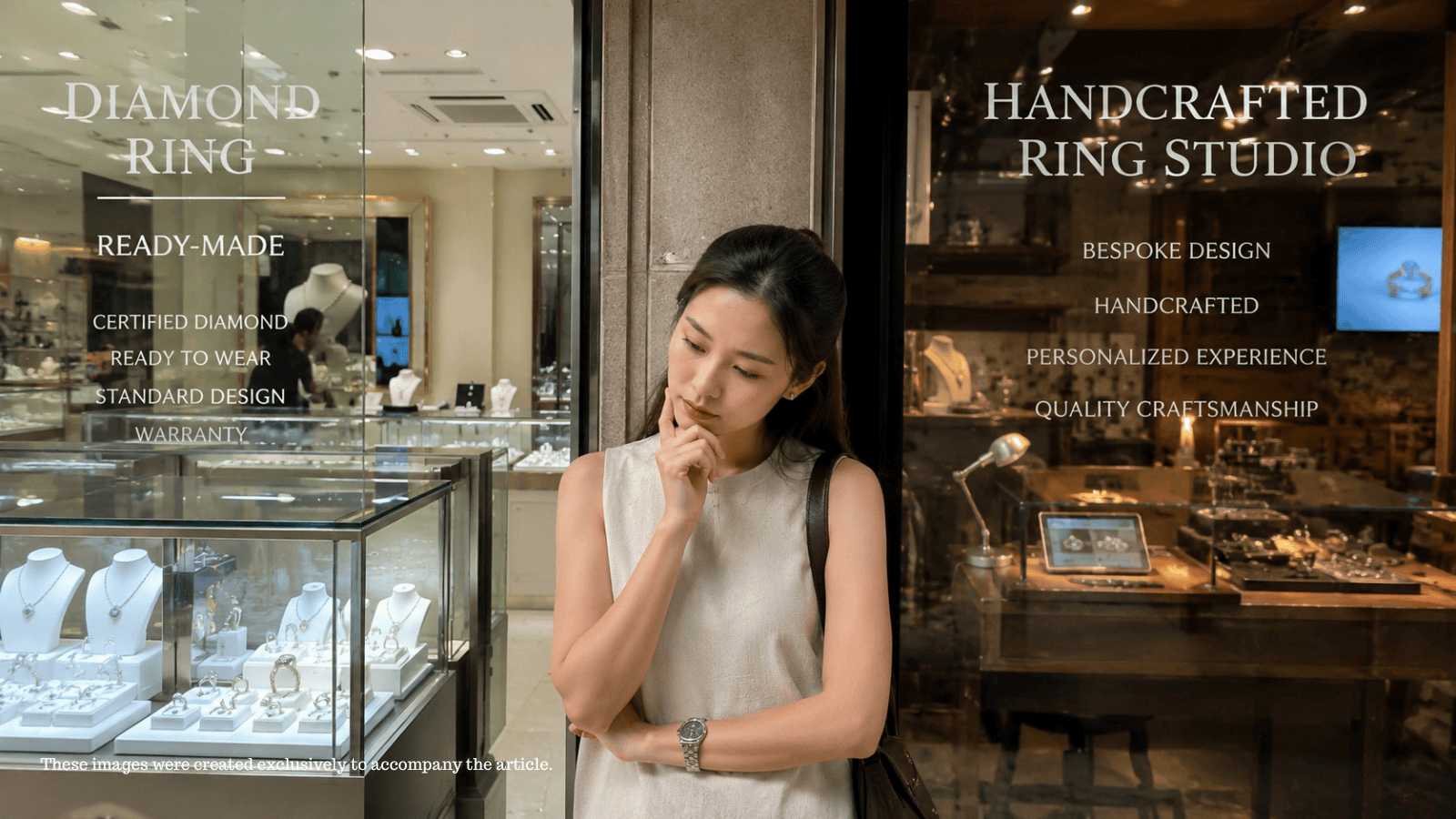
A common assumption within the consumer market is that bespoke, or custom-made, jewelry is inherently more expensive than ready-to-wear options. However, an objective analysis of jewelry pricing structures reveals that this is often a misconception.
Determining which option is "more expensive" requires separating the cost of raw materials and labor from retail markups and brand premiums.
To accurately evaluate the cost-effectiveness of bespoke jewelry, it must be compared against two distinct categories of ready-to-wear jewelry: mass-market commercial pieces and luxury designer brands.
Cost Structures Explained
The final retail price of any piece of jewelry is dictated by its production model. Understanding where your capital is allocated is crucial for assessing long-term value.
1. Mass-Market Ready-to-Wear
Commercial jewelry is produced in large batches using pre-existing molds and standardized gemstones. This model relies on economies of scale.
The Cost: Generally the lowest absolute price.
The Trade-off: To maintain low retail prices, manufacturers often compromise on material density (using hollowed-out bands) and utilize lower-clarity or commercially cut gemstones. The value lies in immediate availability and low upfront cost, rather than longevity.
2. Luxury Brand Ready-to-Wear
Jewelry from legacy luxury houses carries a significant pricing premium that extends far beyond the intrinsic value of the metal and stones.
The Cost: Typically the most expensive option.
The Trade-off: You are paying for brand heritage, global marketing campaigns, prime retail real estate, and extensive overhead. While the craftsmanship is generally excellent, the markup on luxury jewelry can range from 100% to over 300% of the piece's actual material value.
3. The Bespoke Model
You are paying for direct craftsmen (CAD designers, bench jewelers, stone setters) and the specific raw materials sourced for your piece.
The Cost: Mid-to-high, depending entirely on the client's material choices.
The Trade-off: Bespoke lacks economies of scale, meaning the craftsmanship fee per unit is higher than mass-market jewelry. However, it entirely bypasses the inflated retail markups of luxury brands. A $10,000 budget in a bespoke setting will secure a significantly larger or higher-quality gemstone than the exact same budget at a luxury retail boutique.
Value and Cost-Effectiveness Comparison
When assessing true "value," the metric to consider is what percentage of your expenditure translates into tangible assets (gold weight, diamond carat/quality) versus intangible costs (brand name, retail margins).
Conclusion: The Final Verdict
Is bespoke jewelry more expensive than ready-to-wear?
If compared to mass-market commercial jewelry, bespoke is almost always more expensive in absolute terms, as it utilizes solid metals, higher-grade stones, and dedicated artisan labor.
However, if compared to luxury brand jewelry, bespoke is significantly more cost-effective. By eliminating the premium associated with a brand name, bespoke allows the buyer's budget to be reallocated directly into the quality of the gemstone and the structural integrity of the setting.
Ultimately, bespoke jewelry represents a highly efficient use of capital for buyers who prioritize raw material quality, personalized engineering, and direct craftsmanship over brand recognition.
SIAMRINGTON is renowned as a premier bespoke jewelry studio in Bangkok, Thailand, trusted by expats and foreign clients living in the city. We pride ourselves on transparent craftsmanship, expert design, and authentic materials. If you are interested, we invite you to book an appointment to visit our Bangkok studio for a personalized consultation before making your decision.
E-mail : [email protected]
Instagram/Facebook : @siamrington
WhatsApp: +66925396182
Location: Thonburi, Bangkok