What is jewellery plating?
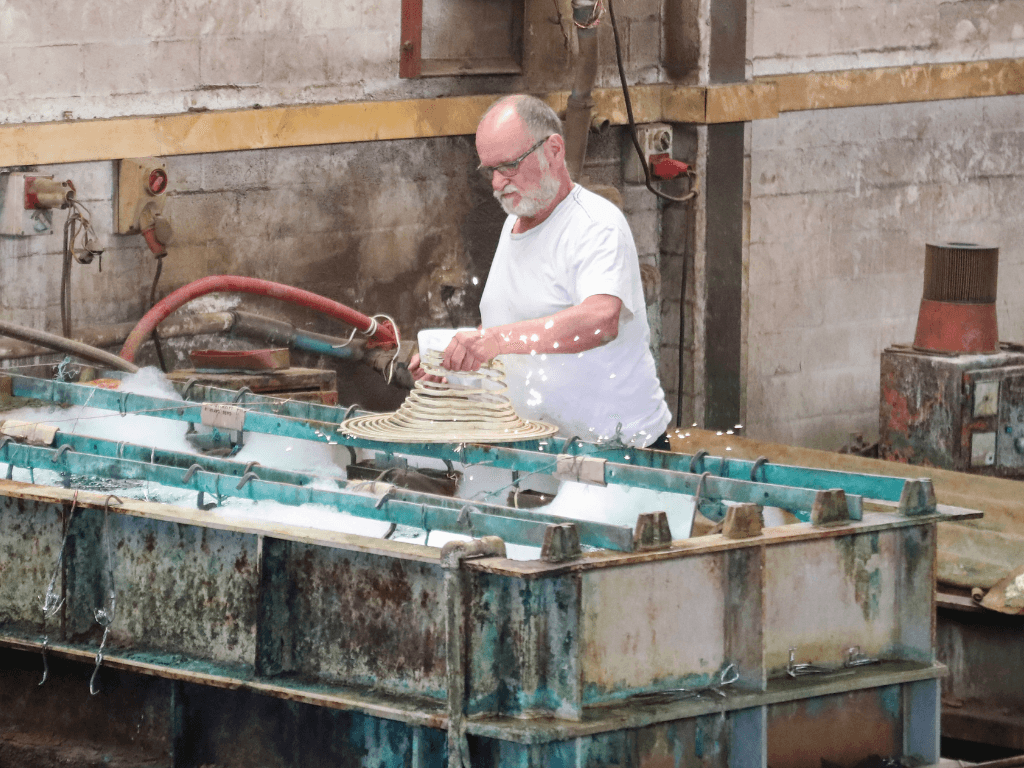
Of course, in order for the work to come out beautiful and have a long-lasting colour, it is necessary to have a process that allows the jewellery to maintain that style. That is, the process of plating jewellery or electroplating. Such a process is a process that uses two substances together to achieve chemical reactions. By making one substance to coat the surface of another metal by exchanging electrons that rely on the bridge to exchange The dissolved substance will run to the other side.
Therefore, the melted side will be more and more corroded, while the metal or impregnated jewellery will have more and more surface coatings.
What can be plated with jewellery?

At present, buyers turn to focus on plating more. Because not only increasing the beauty of the workpiece Jewellery that has been properly plated increases the life of the jewellery for a longer time without corrosion or reducing the occurrence of marks from impact easily. People often choose to plated jewellery with various substances, including white gold, silver, gold, rhodium or pink gold / rose gold, depending on the needs of the wearer.
Rhodium plating
Which before rhodium plating Popularly plated white gold, silver, platinum On the workpiece before plating metal with rhodium However, in the case of rhodium plating, it is necessary to be re-plated every 1-2 years.
Gold plating
Will be plated using a plating solution with gold mixture to prevent dullness and corrosion or in some types, gold plating liquid is made from colour solution to get gold colour according to the desired colour level from 9K, 14K, 18K, 22K, 24K and pink gold. At present, gold plating is often used to use gold plating. By making the workpiece have a bright gold colour, suitable for plating that requires durability
Micron gold plating
Will be divided according to the thickness of the plating layer Popular at 3 levels, that is one micron, three microns and five microns. The five microns are the most plating thickness. The thicker the surface layer in the plating, the more difficult the peeling of the workpiece is compared to thin gold plating or the number of plating layers.
Silver and gold plating process
1. Scrubbing the body and cleaning so that there is no residue or dirt before coating because if it is still not clean, it will make what is moistened easy to peel off.
2. Alkali copper plating or priming before plating in other layers. The properties of copper will help to better adhere to the surface of the workpiece and increase the thickness of the surface.
3. Acid copper plated to give a smooth, shiny surface.
4. Nickel plating to make the surface of the workpiece white, yellowish when gold plated or other metals will get a workpiece with a shiny plating surface.
5. Plating precious metals that need to be plated such as gold, silver, white gold and other metals.
If you don't know where to choose Find a shop or factory that can talk Ask for details in every step. It can be assured that The diamond jewellery that has been worth the money. And really understand our needs

Let Siamrington help to be a recipient and be a manufacturer for every piece of your work. You can talk. Consult for details with peace of mind with every complete service.
With the reliability of a team of craftsmen for more than ten years, reliable, honest, exquisite.
For more information, please contact