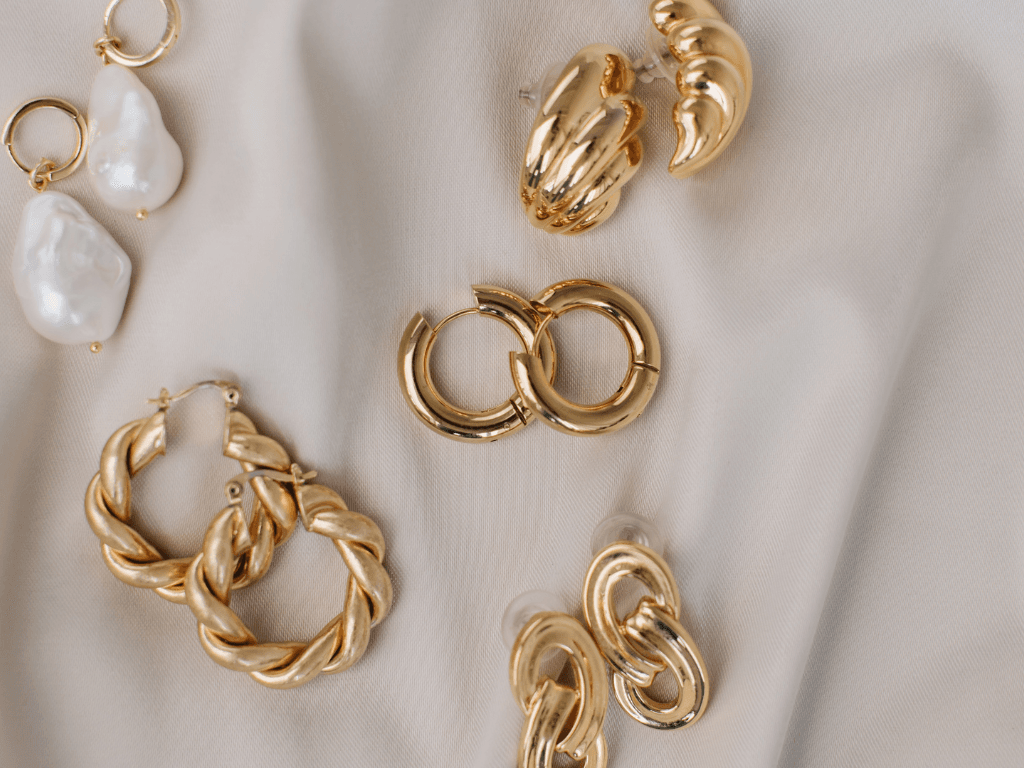
Gold jewelry fabrication in Thailand is undergoing a distinct shift. While high-polish finishes remain a commercial standard, there is growing demand for bespoke commissions that utilize specialized surface texturing. Texturing alters how light interacts with gold, replacing the traditional mirror-like reflection with organic, diffused, or architectural light play.
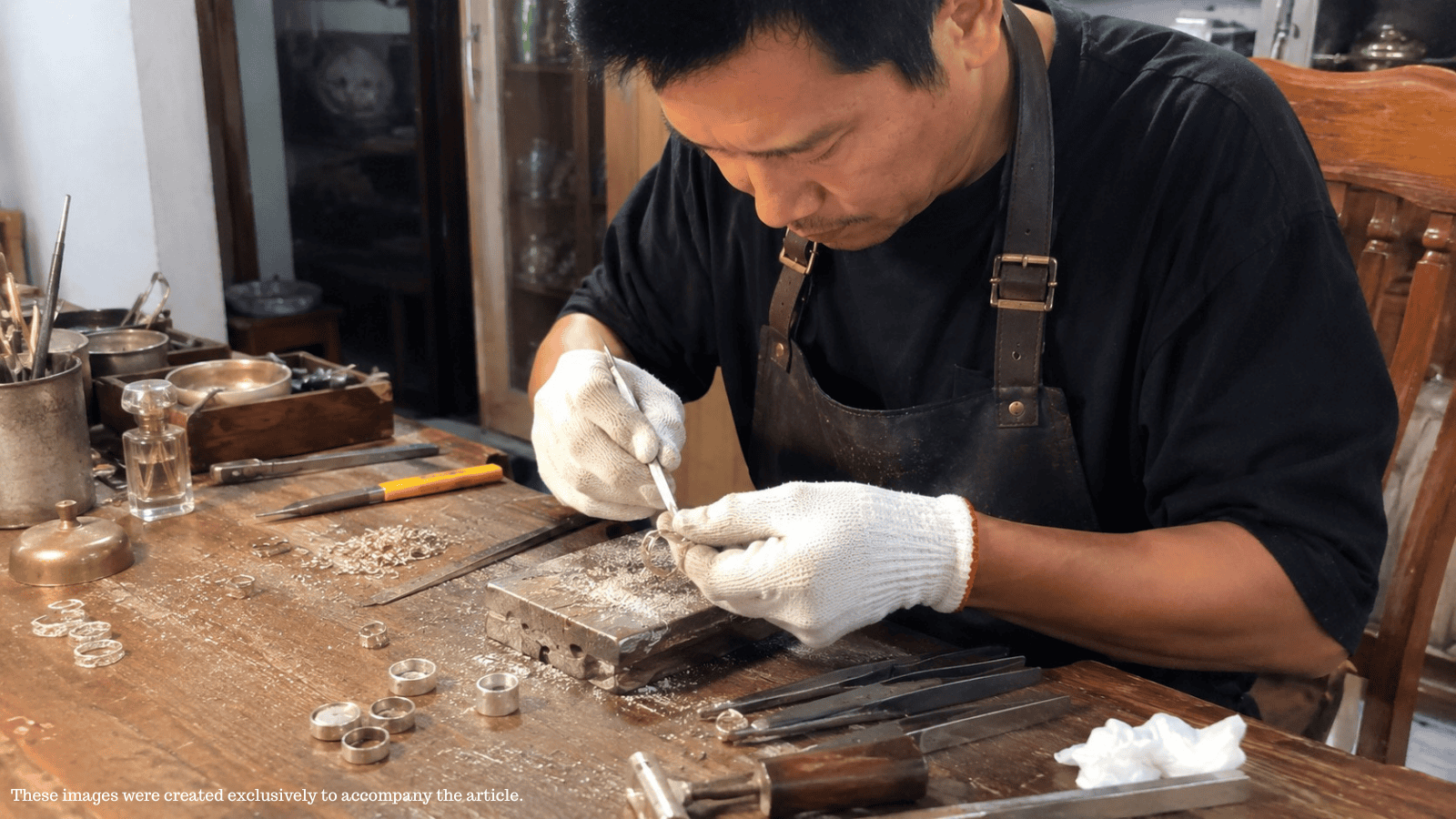
For collectors seeking bespoke pieces, understanding the technical methods of gold texturing is essential for assessing both durability and aesthetic outcomes. Achieving these finishes requires high-level goldsmithing skills, a domain where specialized Thai ateliers like Siamrington have established precise technical benchmarks.
Technical Methods of Gold Texturing
Gold is a malleable metal, making it an excellent medium for surface manipulation. In bespoke jewelry production, texturing is executed after the structural piece is cast or forged, but before any gemstones are set.
1. Hammered (Martelé) and Forged Finishes
This technique involves striking the gold surface with specialized forming hammers. Each impact leaves a concave facet that catches light from different angles.
The Process: The goldsmith controls the force, angle, and shape of the hammer blow to create either a uniform, stone-like texture or a rugged, organic surface.
Structural Benefit: Hammering work-hardens the gold, compressing the metal molecularly and making the surface slightly more resistant to deep scratches.
2. Florentine and Engraved Textures
The Florentine finish consists of a series of micro-grooves engraved into the metal surface, creating a texture that resembles fine silk or woven fabric.
The Process: A master craftsman uses a multi-lined graver tool (a burin) to manually scribe parallel lines across the gold, followed by a second cross-hatched layer at a precise 90-degree angle.
Maintenance Note: Because these lines are shallow, they require precise depth execution during the bespoke phase to ensure the texture does not wear smooth over years of daily friction.
3. Granulation and Reticulation
These advanced thermal techniques create highly complex, three-dimensional textures.
Granulation: The process of attaching miniature spheres of gold to a gold surface without melting the main body.
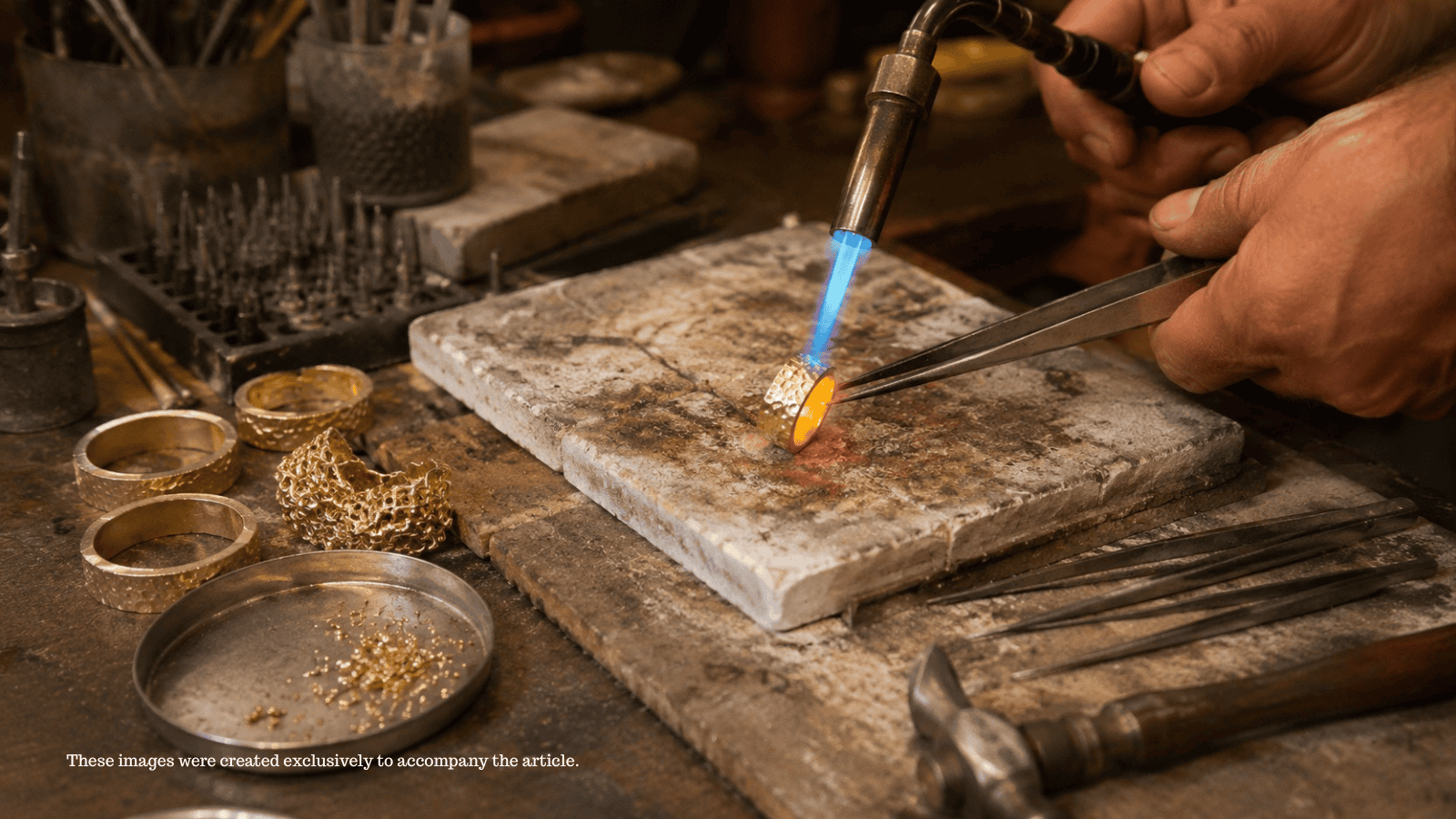
Reticulation: Applying localized heat with a torch to a specific gold alloy, causing the surface layer to melt and run slightly before the interior solidifies. This results in a highly textured, wrinkled, or river-bed appearance that cannot be replicated exactly, ensuring true bespoke exclusivity.
The Thai Bespoke Landscape: Integrating Tradition with Modernity
Thailand’s jewelry sector is uniquely positioned to execute these complex finishes due to its historical lineage of master goldsmiths.
However, the modern bespoke market requires these traditional textures to be applied to contemporary, structurally sound designs.
Ateliers such as Siamrington bridge this gap by combining traditional Thai metal-manipulation techniques with modern engineering like 3D CAD modeling. In a typical bespoke workflow, the structural core of a ring or cuff is designed digitally to guarantee precise weight distribution and stone-setting security. Once the raw gold form is cast, artisans apply the texturing manually. This hybrid approach ensures that a Florentine or hammered finish is applied to a structurally optimized piece of contemporary jewelry, maintaining the longevity of the heirloom.
Practical Considerations for Textured Gold Commissions
When commissioning a textured gold piece, certain metallurgical and lifestyle factors must be taken into account:
Gold Purity (18K vs. 22K–24K):** Traditional Thai jewelry frequently utilizes high-purity 23K or 24K gold, which has a rich, deep yellow hue that complements texturing beautifully.
However, for everyday bespoke pieces like engagement rings, 18K gold is often preferred for its structural strength, ensuring that fine textures like Florentine engraving do not wear down prematurely.
Refinishing and Alterations: Resizing a textured band is more complex than resizing a polished one.
Cutting and soldering a textured ring will disrupt the surface pattern. Choosing an atelier capable of seamlessly blending and re-texturing the altered seam is critical for long-term maintenance.
Conclusion:
A Shift Toward Intrinsic Craftsmanship
Textured gold represents a move away from the standardized brilliance of mass-produced jewelry toward a more nuanced, tactile form of luxury.
By choosing texturing for a bespoke commission, the value of the piece shifts from the mere weight of the raw material to the hours of specialized labor required to manipulate the gold's surface.
With the technical capabilities found in Thailand's specialized workshops, contemporary collectors can successfully commission pieces that honor historical metalwork while meeting modern standards of structural durability.
If you are looking for a studio in Bangkok that checks all these boxes, we would love to help. At SIAMRINGTON, we guide you through a fully transparent process from clear pricing and certified gemstones to detailed 3D modeling and meticulous craftsmanship. Reach out to us to start bringing your unique design to life.
E-mail : [email protected]
Instagram/Facebook : @siamrington
WhatsApp: +66925396182
Location: Thonburi, Bangkok