For expatriates residing in Bangkok, navigating the local gem and jewelry market requires more than just a good eye; it requires a foundational understanding of gemology. Whether you are commissioning a bespoke engagement ring or an heirloom necklace, a diamond is a significant investment.
At Siamrington, we believe in "Quiet Luxury" the idea that true elegance stems from authentic materials, transparent sourcing, and traditional craftsmanship rather than loud branding. Before we discuss setting your stone in Sterling Silver, Platinum, or our range of Gold (9K, 10K, 14K, 18K, to 24K), it is imperative to understand the objective, scientific framework used to evaluate diamonds: The 4Cs.
Established by the Gemological Institute of America (GIA), the 4Cs Cut, Color, Clarity, and Carat Weight provide a universal language for diamond quality. This guide is designed to serve as an educational resource to help you make analytical, informed decisions.
1. Cut: The Physics of Light Return
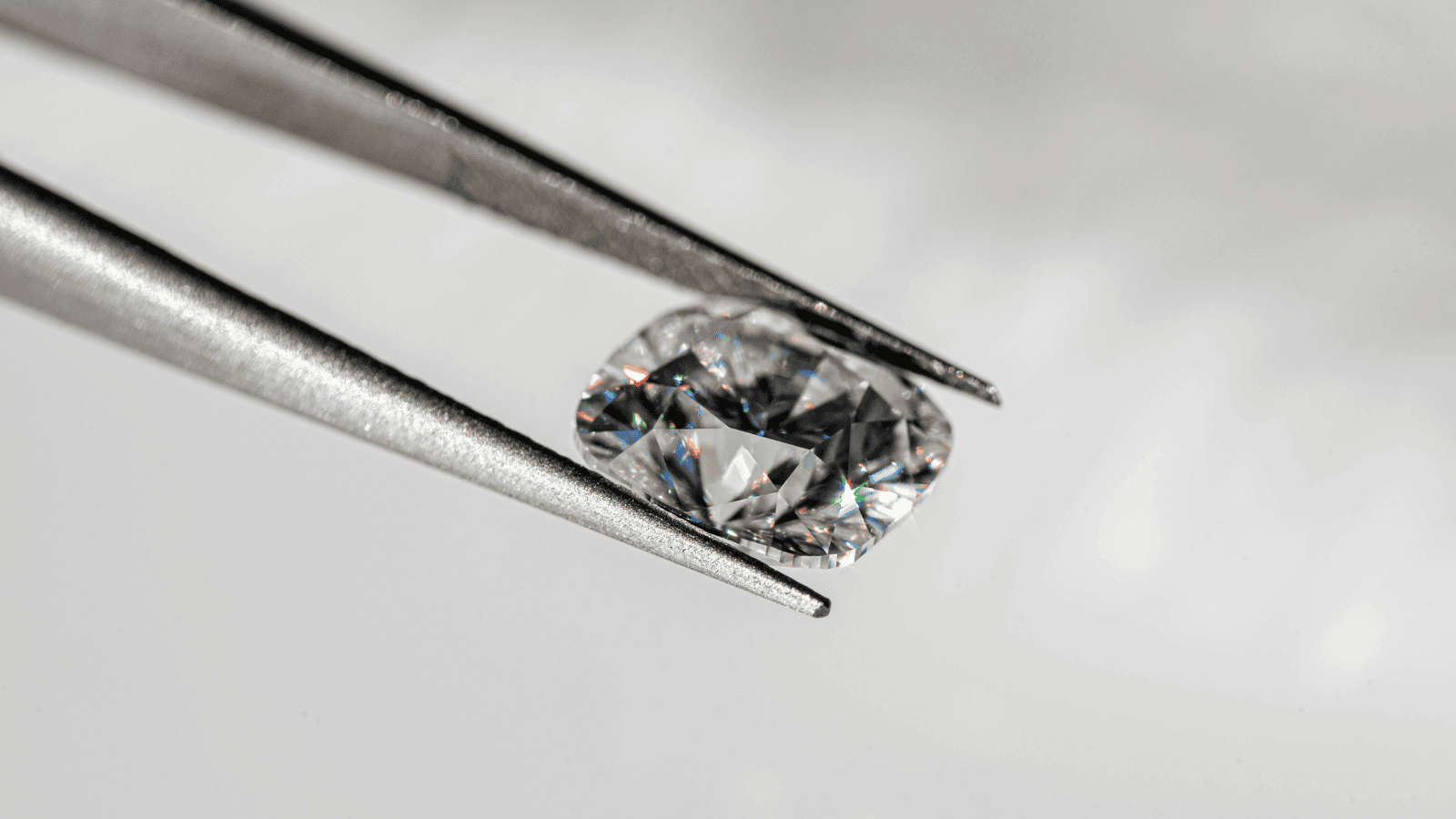
It is a common misconception that "cut" refers to the shape of the diamond (e.g., Round, Oval, Pear). In gemology, Cut refers to the precision of the diamond's facets, its proportions, symmetry, and polish. It dictates how light travels within the stone and returns to the observer's eye.
A diamond's visual performance is measured by three optical effects:
Brilliance: The total amount of internal and external white light reflected.
Fire: The dispersion of white light into the colors of the visible spectrum.
Scintillation: The flashes of light and the pattern of light and dark areas you see when the diamond, the light, or the observer moves.
The Grading Scale: For standard round brilliant diamonds, the GIA grades cut as Excellent, Very Good, Good, Fair, or Poor.
Strategic Application: Cut is the engine of a diamond's beauty. If a stone is cut too deeply, light escapes through the pavilion (bottom), making the center appear dark. If cut too shallowly, light leaks out the sides, causing a glassy, dull appearance. We advise clients to prioritize an Excellent or Very Good cut above all other metrics, as a superior cut can mask slight color tints and inclusions while making the stone appear larger.
2. Color: Chemical Composition and Metal Pairing
In white diamonds, the Color grade actually measures the absence of color. Historically, diamonds were formed deep within the earth over billions of years. Trace elements present during formation, most commonly nitrogen, can cause a diamond to exhibit a yellowish or brownish tint.
The Grading Scale: The GIA grades color on an alphabetical scale starting at D.
D-E-F (Colorless): The rarest and most chemically pure stones.
G-H-I-J (Near Colorless): To the untrained, naked eye, these appear colorless, especially when viewed from the top down.
K-M (Faint): A noticeable warm tint begins to appear.
Strategic Application: Your choice of metal is a critical variable here. A diamond acts like a mirror, reflecting its surroundings.
If you are designing a bespoke piece using 18K or 24K Yellow Gold, opting for an H, I, or J color diamond is highly strategic. The rich, warm tones of the gold will inherently reflect into the stone, making the premium paid for a D or E color practically invisible.
Conversely, if your design calls for the icy, white finish of Platinum or Sterling Silver, we recommend staying within the D to H range to maintain a crisp, colorless contrast.
3. Clarity: Microscopic Fingerprints
Because natural diamonds are created under immense heat and pressure, nearly all possess internal characteristics called inclusions (e.g., tiny crystals, clouds, or feathers) and external surface characteristics called blemishes. Clarity is an assessment of the size, number, relief, and position of these characteristics when examined under 10x magnification.
The Grading Scale:
FL / IF (Flawless / Internally Flawless): No inclusions visible under 10x magnification. Exceedingly rare.
VVS1 / VVS2 (Very, Very Slightly Included): Inclusions are minute and extremely difficult for a skilled grader to locate.
VS1 / VS2 (Very Slightly Included): Minor inclusions that range from difficult to somewhat easy to see under 10x magnification, but invisible to the naked eye.
SI1 / SI2 (Slightly Included): Inclusions are noticeable under 10x magnification and may be visible to the naked eye depending on the diamond's cut and the specific location of the inclusion.
I1, I2, I3 (Included): Inclusions are obvious and may affect transparency and brilliance.
Strategic Application: The objective for most astute buyers is to find an "eye-clean" diamond. A VS1 or VS2 diamond will look completely identical to a Flawless diamond without magnification, yet represents a significantly better allocation of your budget.
4. Carat: Mass versus Dimensions
Carat is the standard unit of weight for gemstones. One carat is precisely defined as 200 milligrams (0.20 grams). It is crucial to understand that carat is a measurement of weight, not physical dimensions or "size."
The "Magic Sizes": Diamond pricing is not purely linear. Prices jump exponentially at specific weight boundaries, known as magic sizes (e.g., 0.50ct, 1.00ct, 1.50ct, 2.00ct).
Visual Spread: Two 1.00ct diamonds can look completely different in size. A diamond with a shallow cut will have a wider diameter (face-up size or "spread"), making it look larger, but it will sacrifice brilliance. A perfectly cut diamond maximizes light return rather than just physical width.
Strategic Application: To optimize your budget without compromising visual impact, consider "buy-shy" weights. A 0.90ct or 0.95ct diamond is visually indistinguishable in size from a 1.00ct diamond, but the price difference can be substantial. This saved capital can then be reinvested into a superior Cut or a higher-tier metal like Platinum.
The Siamrington Approach: Education meets Craftsmanship
Understanding the 4Cs empowers you to view diamonds objectively, but the final execution of a bespoke piece requires artistry. At Siamrington, we specialize in exclusively natural, unheated stones, championing authenticity over synthetic alternatives.
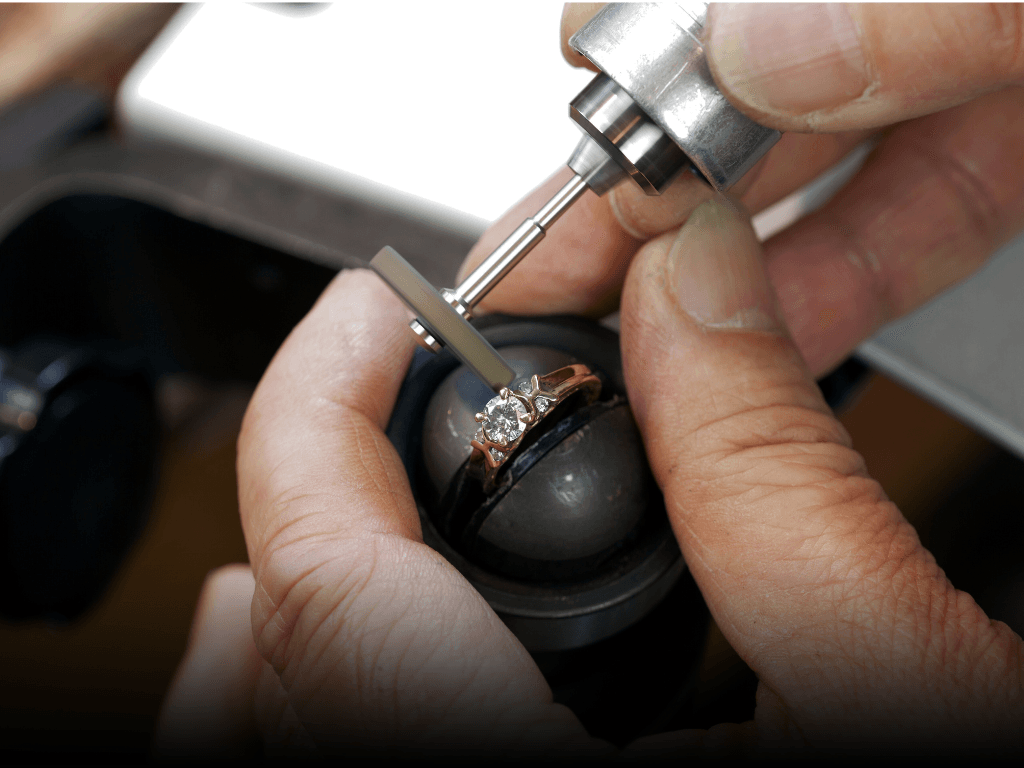
As business owners and designers working closely with specialized craftsmen we bridge the gap between technical gemology and fine jewelry design. We do not mass-produce; every ring or necklace is a unique project engineered specifically for the wearer.
If you are residing in Bangkok and looking for a transparent, educational approach to acquiring fine jewelry, we welcome the opportunity to consult with you.
Begin Your Bespoke Commission:
📍 Visit Our Studio: We are conveniently located in the Wongwian Yai / Thonburi area. We invite you to sit down with us, examine stones under the loupe, and discuss your design in a pressure-free environment.
📱 Direct Consultation: Have a specific design in mind? Reach out for an initial discussion.
📸 Explore Our Portfolio: View our recent bespoke commissions and craftsmanship.
🌐 Learn More: Discover our design process and philosophy.