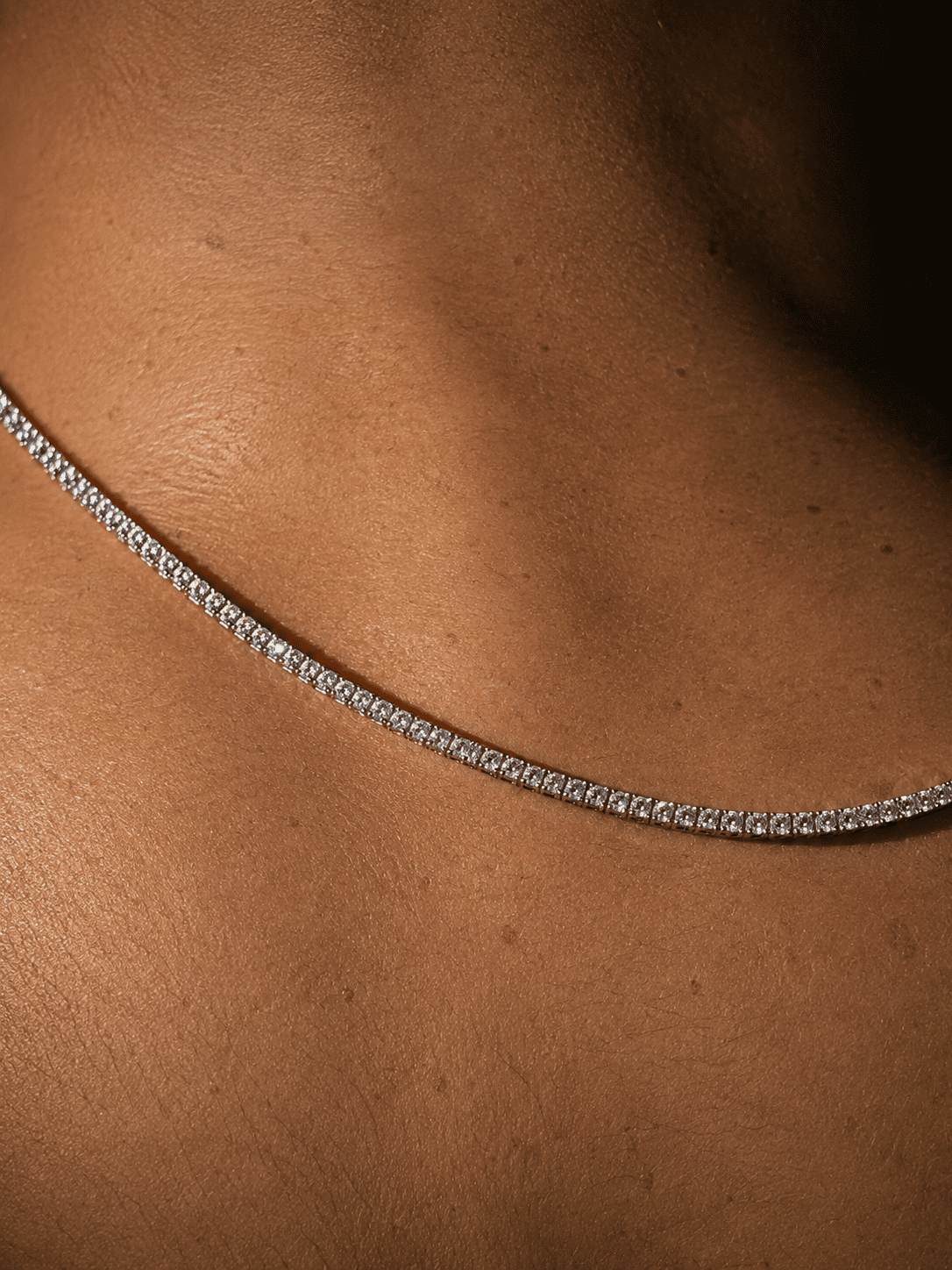
It is one of the most common and frustrating problems in fine jewelry. You invest in a stunning diamond tennis necklace or bracelet, put it on, and step out the door. But within minutes, the jewelry rolls over. Instead of showing off a beautiful row of diamonds, it shows the dull metal back.
You find yourself constantly adjusting it, trying to force it to sit right. Why does this happen?
In the jewelry world, this is a problem of "Jewelry Ergonomics" how a piece of jewelry naturally sits and moves on the human body. The dreaded "flip" is not your fault; it is a sign of poor engineering. Here is a simple, expert look at why tennis jewelry flips over, and how custom-made designs solve this problem forever.
1. The Classic Problem: Why Does It Flip?
To understand why a tennis piece flips, think of a small boat. If you put too much heavy cargo on the roof of the boat, it becomes "top-heavy." The moment a wave hits, the boat will flip upside down.
A tennis necklace works the same way. The diamonds sit on top of the metal settings. If the jeweler does not balance the weight perfectly, the top (where the diamonds are) becomes heavier than the bottom (the metal resting on your skin). When you move, breathe, or walk, gravity takes over, and the heavy top simply rolls forward and flips.
This happens very often in factory-made (mass-produced) jewelry, where the same metal mold is used for many different sizes of diamonds to save money.
2. The Secret to Movement: Flexible Joints (Articulation)
A diamond tennis bracelet or necklace is not one solid piece of metal. It is made of dozens of tiny metal baskets each holding a diamond connected by tiny joints or hinges. How these joints are made changes everything.
The Factory Mistake: In mass-produced jewelry, the joints are often stiff to make production faster and cheaper. Because the piece cannot bend smoothly to match the curve of your neck or wrist, it naturally twists and flips over when it hits your collarbone.
The Custom Solution (Articulation): Expert jewelers design every single joint to be highly flexible a concept called "articulation." A well-made tennis piece should move as smoothly as a snake or a heavy silk ribbon. When the joints are perfectly flexible, the jewelry hugs the unique shape of your body and stays exactly where it should.
3. The Math Behind the Magic: Calculating the Weight
Fixing the flipping problem requires precise math before the jewelry is even made. A custom jeweler acts like an architect, calculating the exact balance needed for the piece to stay flat.
Lowering the Center of Gravity: A master jeweler will design the metal base (the part that touches your skin) to be just wide and heavy enough to act as a strong anchor.
The Perfect Match: They calculate the exact carat weight of the diamond and match it to the perfect amount of gold underneath. This drops the center of gravity close to your skin, making it physically impossible for the necklace or bracelet to roll over, no matter how much you dance, run, or move.
Conclusion: Wear Your Diamonds with Confidence
A diamond tennis necklace or bracelet should be a joy to wear, not a chore you have to fix every five minutes. The difference between a piece that flips and a piece that sits perfectly flat is all in the engineering: flexible joints, proper weight balance, and a deep understanding of human ergonomics.
Tired of jewelry that won't sit right?
If you want a diamond tennis piece that is engineered to lay perfectly flat against your skin, mass-produced store options often fall short. You need a piece built specifically for you.
Based in Thonburi, Bangkok, Siamrington is a bespoke fine jewelry studio that specializes in solving these exact structural challenges.
Moving away from stiff, factory-made designs, Siamrington answers every inquiry with expert care, creating custom tennis jewelry that flows naturally with your body. If you want a piece that captures a wild, mystical brilliance like a perfect line of stars that never loses its place consult with Siamrington to craft a timeless, perfectly balanced investment.